
An Evidence-Based Guide to Substance Use Prevention, Recovery, Healthy Coping, and Sustainable Change.
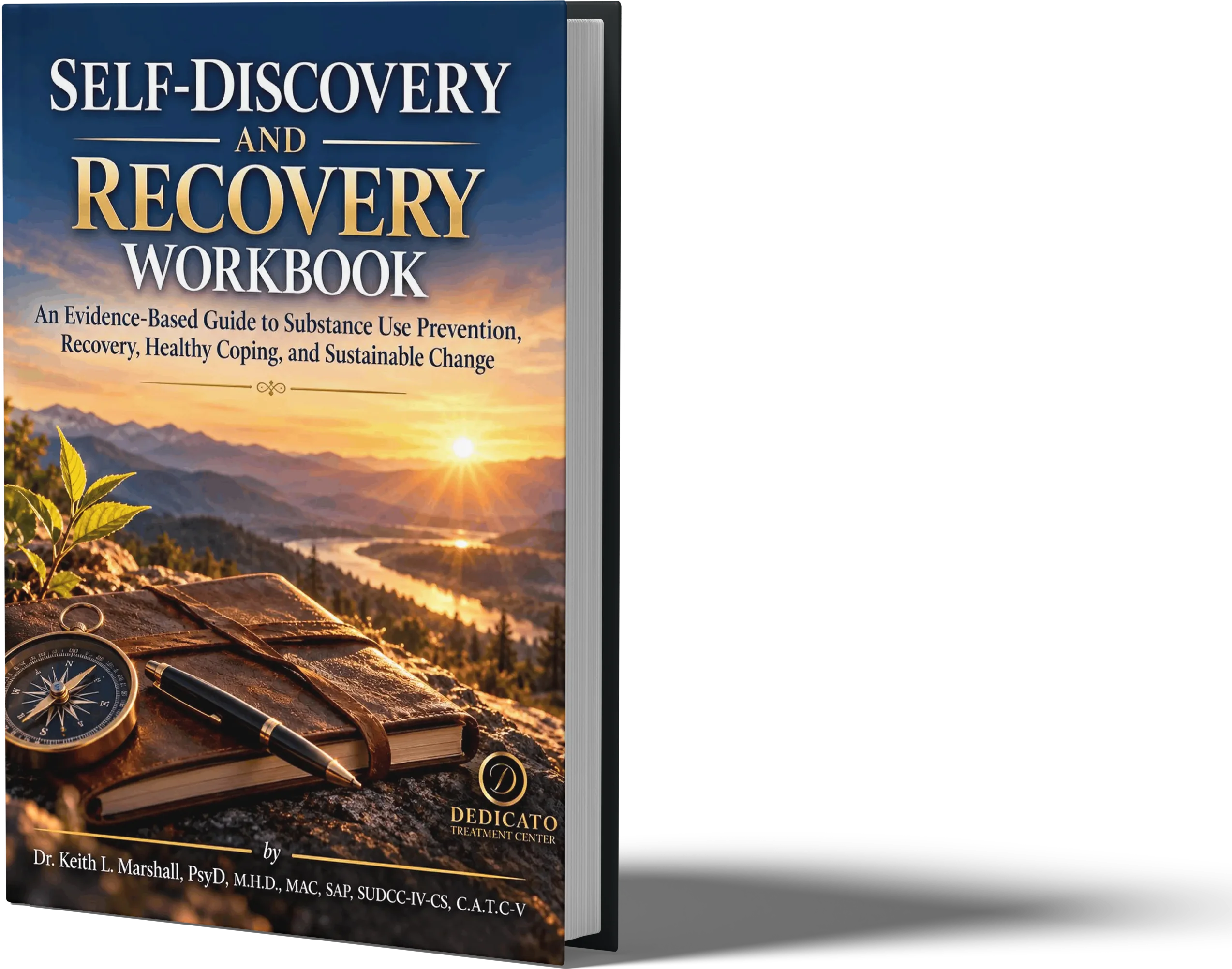
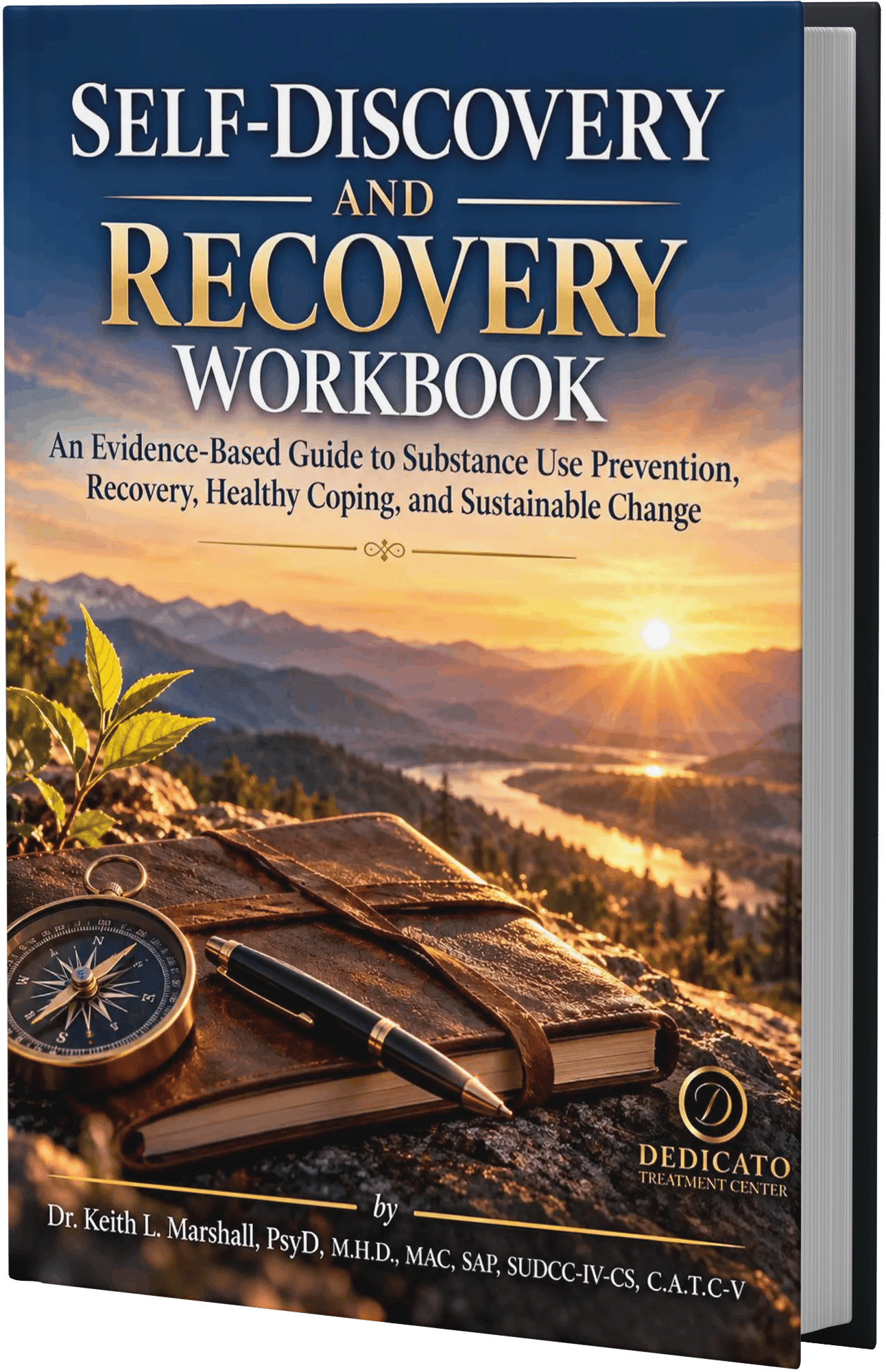
The Self-Discovery and Recovery Workbook is an evidence-informed, practical guide designed to help individuals move beyond simply stopping unhealthy behaviors and begin understanding the thinking, experiences, choices, and patterns that drive them. Through guided self-examination, the workbook addresses substance use and relapse prevention, denial, triggers, cognitive distortions, emotional regulation, self-esteem, relationships, social support, healthy coping, personal responsibility, and spiritual awareness—helping individuals become active participants in their own recovery and personal growth.
Built around Dr. Marshall’s principle that honesty is the taproot of recovery and meaningful change, the workbook uses Introspection, Retrospection, and Correction to help individuals look within, understand what has shaped them, and intentionally change what is within their power to change. Designed for independent use or collaborative work with counselors, therapists, peer-support professionals, and treatment teams, it transforms self-discovery into action—because sustainable recovery requires more than talking about change; it requires actively participating in it.
Lasting transformation begins with rigorous honesty, self-examination, and the courage to confront uncomfortable truths and take meaningful action.
The Self-Discovery and Recovery Workbook is an evidence-informed self-help guide developed from Dr. Keith L. Marshall’s extensive educational research, professional expertise, and lived experience. Holding a master’s degree in Human Development, a doctorate in Clinical Psychology, and multiple certifications in addiction treatment, anger management, and professional fitness training, Dr. Marshall is also a Master Addiction Counselor and Founder and CEO of a California Department of Health Care Services–certified and Joint Commission, accredited treatment corporation.
Having survived 23 years of chronic crack cocaine addiction, childhood sexual and physical abuse, homelessness, and multiple near-death experiences, including being shot in the head and stabbed repeatedly, Dr. Marshall understands firsthand the devastating effects of trauma, low self-esteem, destructive thinking, and victim mentality. Once homeless and hiding behind dumpsters in shame, he ultimately transformed his life through recovery, education, personal accountability, and the consistent practice of principles.
This workbook was designed to be read, written in, and actively used to process difficult thoughts, painful emotions, unhealthy beliefs, and challenging life experiences. Through structured self-assessments, cognitive behavioral exercises, guided reflection, self-esteem development, and relapse prevention strategies, readers are encouraged to move beyond merely talking about their struggles toward examining, processing, and changing the thinking and behaviors that sustain them.
Central to the workbook is Dr. Marshall’s framework of Introspection, Retrospection, and Correction, supported by universal principles such as courage, hope, honesty, integrity, forgiveness, justice, humility, compassion, accountability, and responsibility. Regardless of personal beliefs, meaningful transformation requires putting principles into practice.
Although designed for individual use, the workbook may also be completed alongside a trusted friend, mentor, peer support, counselor, therapist , recovery community member, or other supportive person. Such collaboration can provide valuable perspectives, reveal blind spots, challenge unhealthy assumptions, and help individuals recognize difficult truths they might otherwise overlook.
For those willing to approach these exercises with rigorous honesty, even when the process becomes uncomfortable, this workbook offers an opportunity for a profound paradigm shift, transforming how they think, feel, respond, and behave.
Ultimately, this is more than a book about addiction recovery and prevention. It is a practical guide to reading, writing, processing, practicing principles, and taking intentional action toward real, observable, and sustainable change.
Your past may explain your circumstances, but it does not have to determine your future. Transformation begins when truth is confronted, principles are practiced, and meaningful action follows.